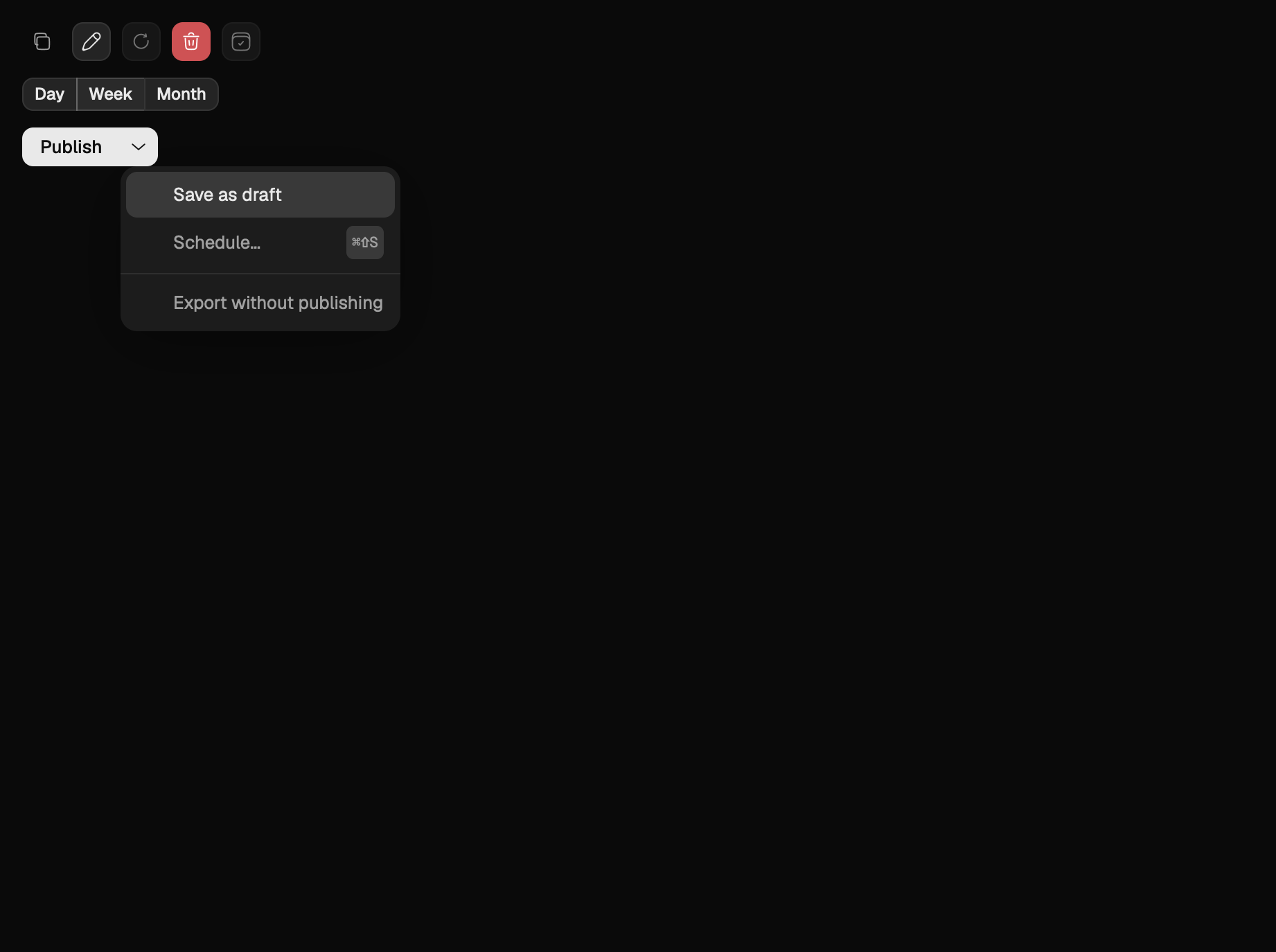
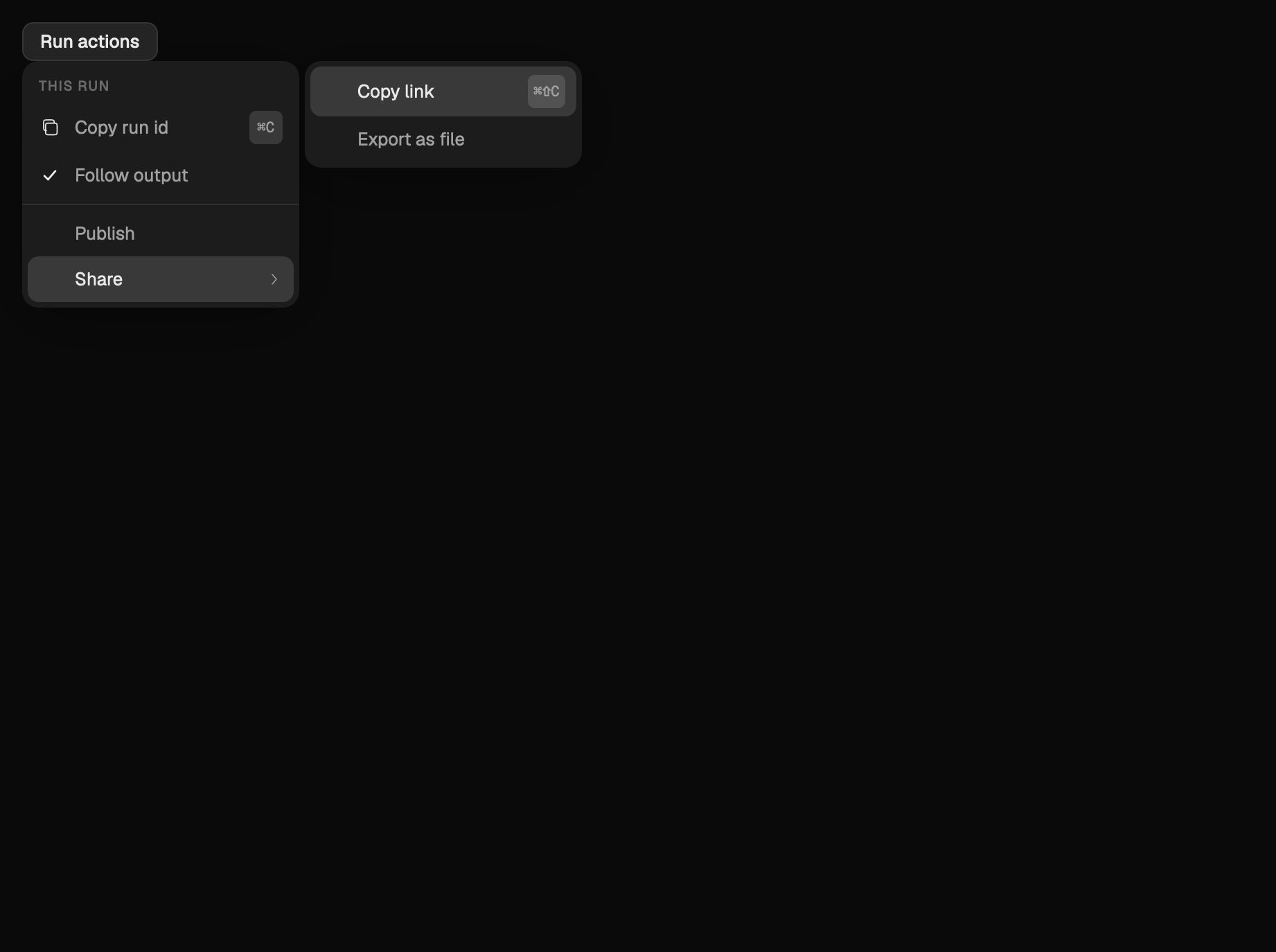
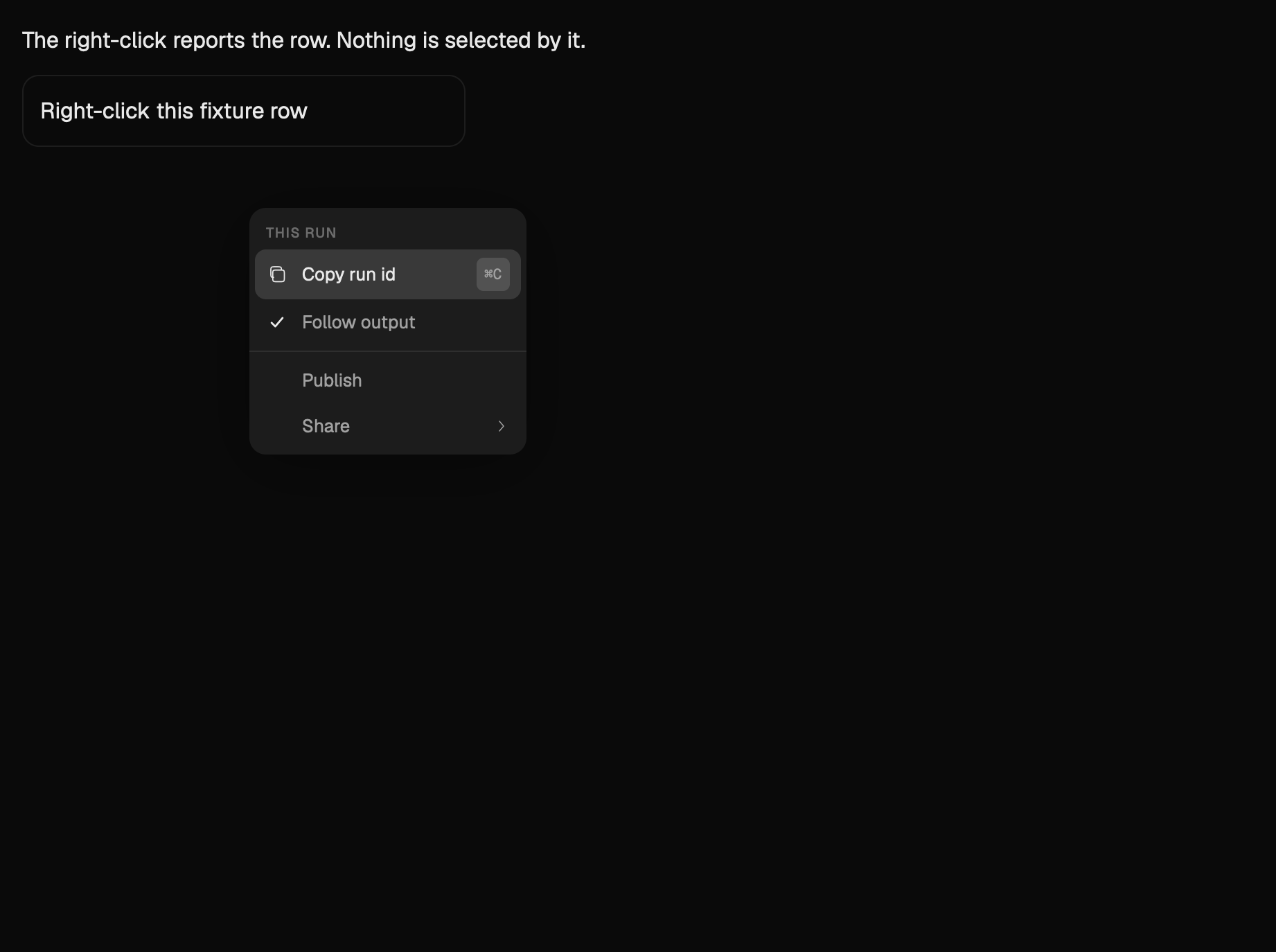
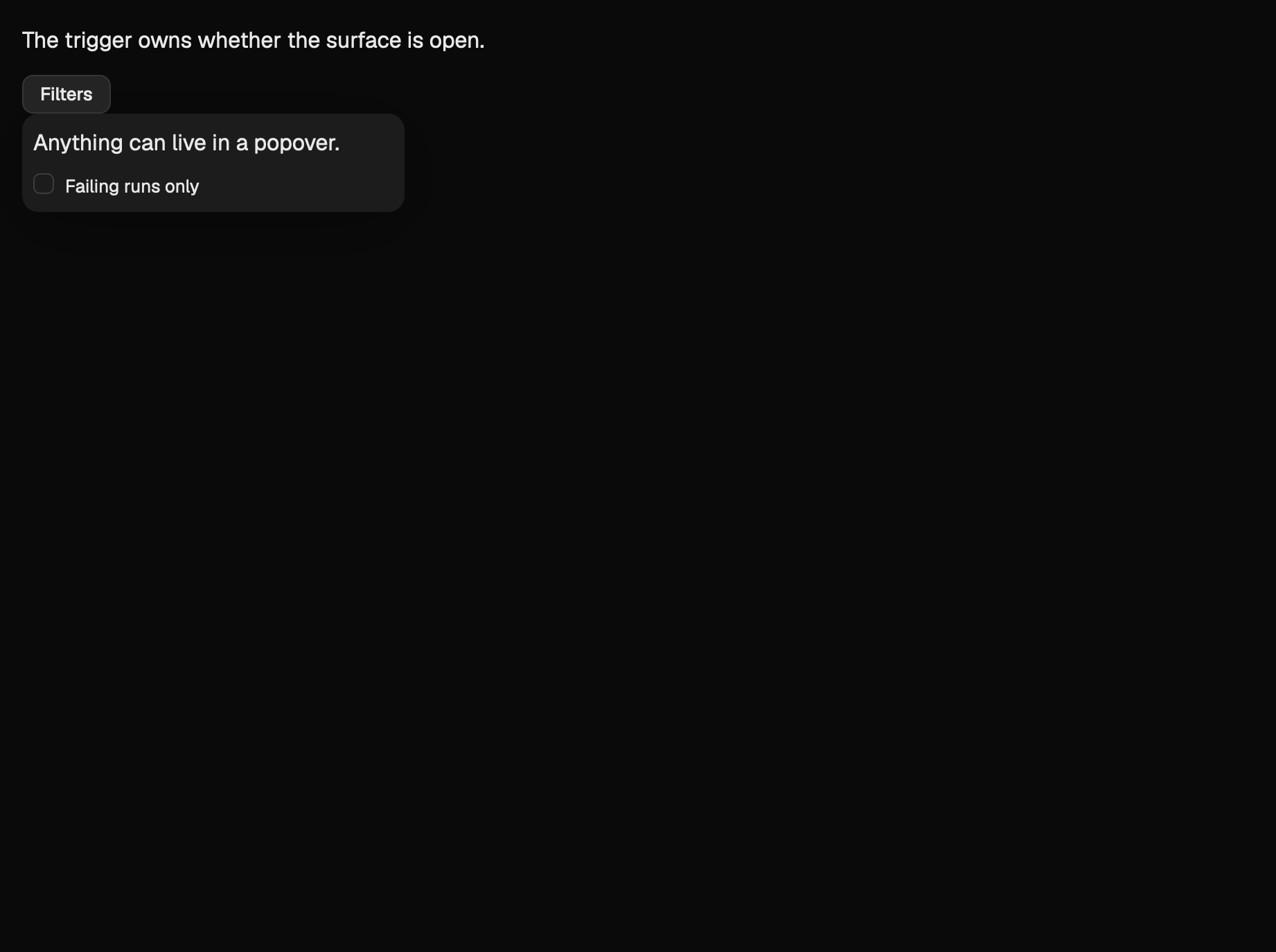
Menu view
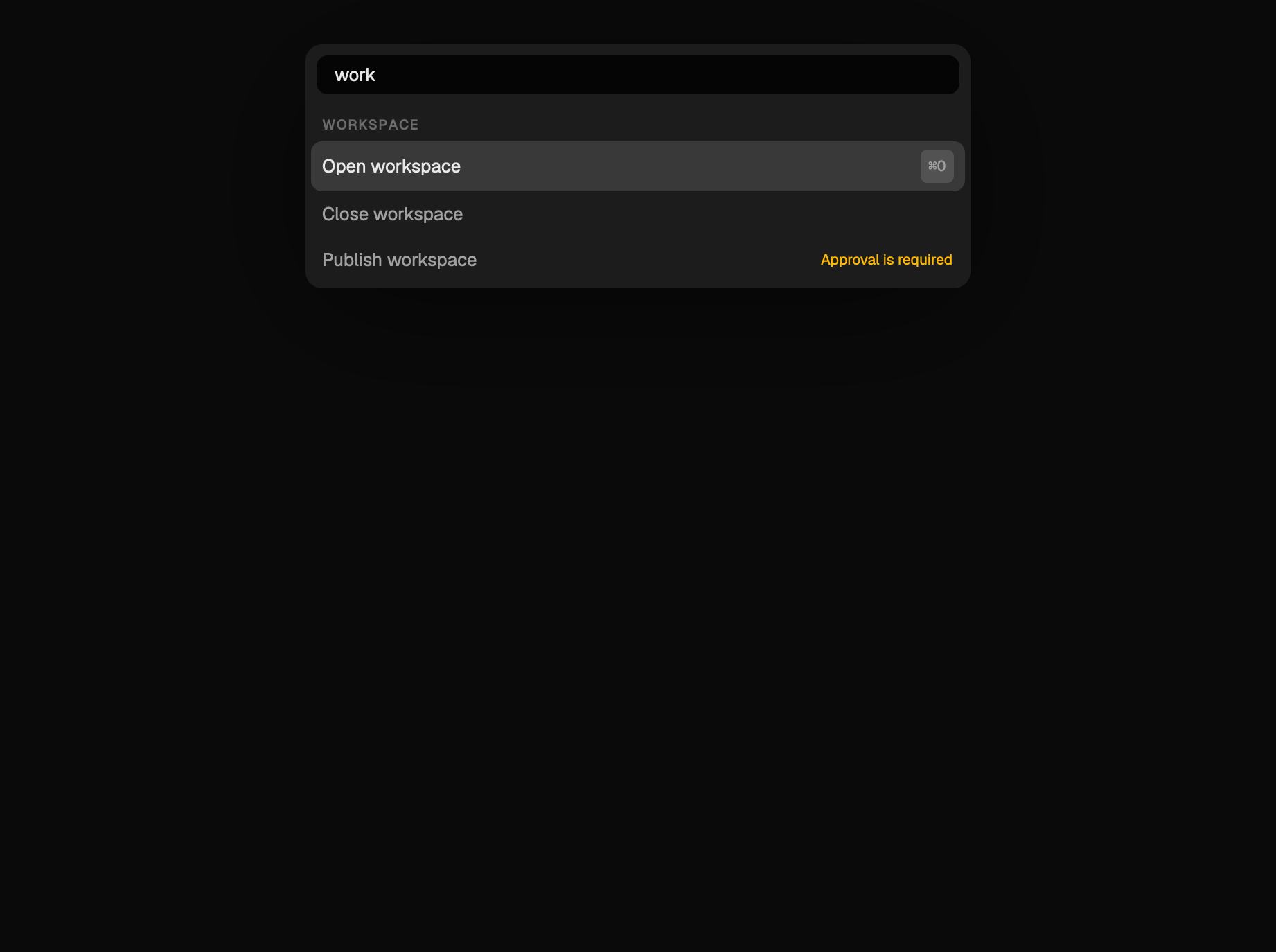
A list of commands, opened from a trigger.
A view survives a frame. Hold it in an Entity with cx.new(..) and reach it with .update(..).
use gpui_kit::overlay::Menu;Construct
new(ident: impl Into<Ident>, _window: &mut Window, cx: &mut Context<Self>) -> SelfOptions
Chain onto the value.
trigger(label: impl Into<SharedString>) -> Self
trigger_icon(glyph: Icon) -> Self
trigger_name(name: impl Into<SharedString>) -> Self
trigger_variant(variant: ButtonVariant) -> Self
trigger_join(join: ButtonJoin) -> Self
items(items: impl IntoIterator<Item = MenuItem>) -> Self
placement(placement: Placement) -> Self
Commands
Need a Context, so they need a view.
set_trigger_name(name: impl Into<SharedString>, cx: &mut Context<Self>)
set_trigger_style(variant: ButtonVariant, size: ControlSize, cx: &mut Context<Self>)
set_items(items: Vec<MenuItem>, cx: &mut Context<Self>)
open(window: &mut Window, cx: &mut Context<Self>)
open_submenu(id: &str, window: &mut Window, cx: &mut Context<Self>) -> bool
close(window: &mut Window, cx: &mut Context<Self>)
dismiss(window: &mut Window, cx: &mut Context<Self>)
toggle(window: &mut Window, cx: &mut Context<Self>)
Queries
Only answer; they change nothing.
offered() -> &[MenuItem]
is_open() -> bool
Reports
The variants of the event it emits. It never applies the change itself.
- Opened
- Invoked
- Dismissed
- Closed
Rendered by
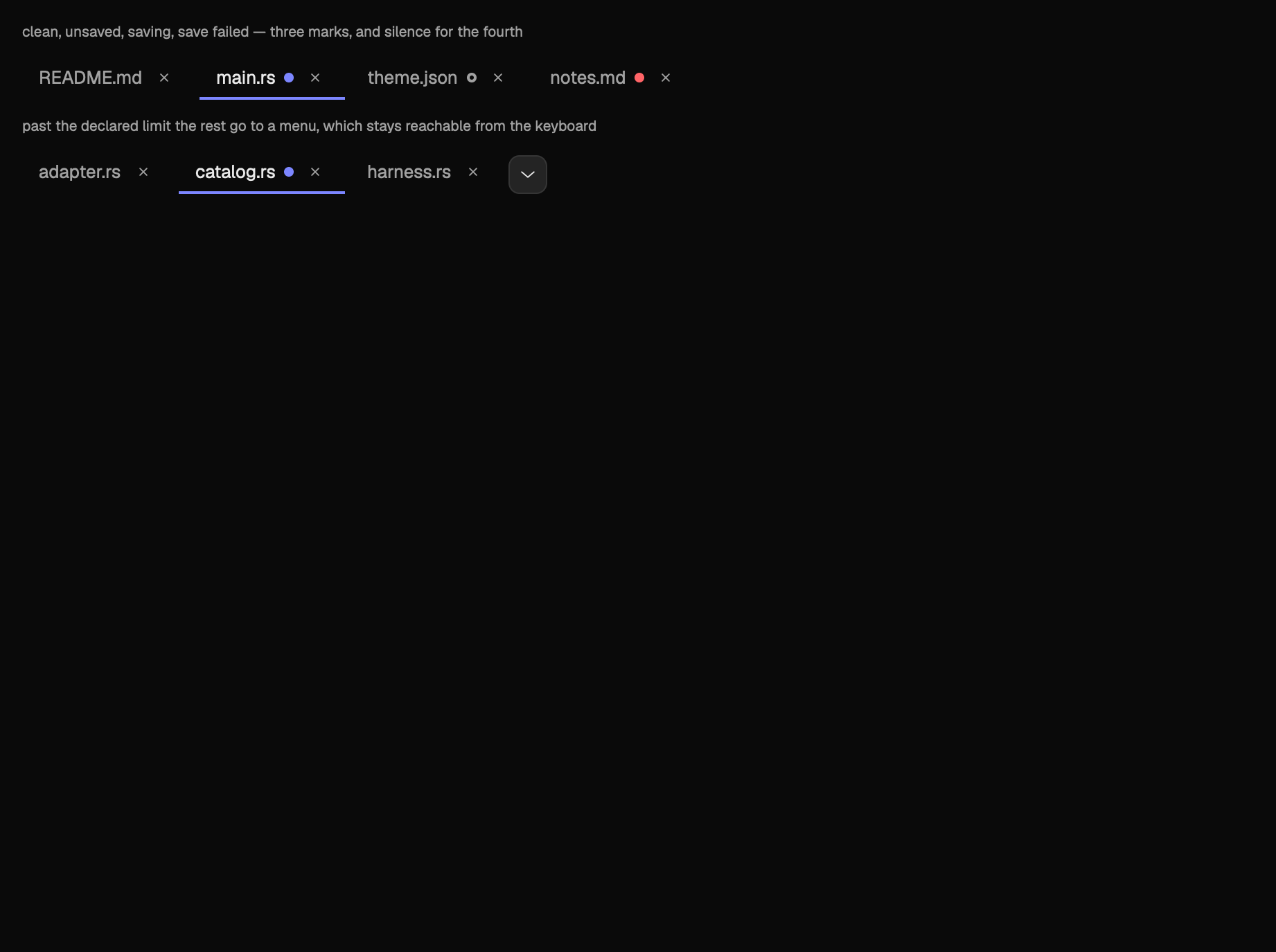
Each of these compiles and is captured by the gate, so the code behind them is verified rather than written.